Learn how traditional ghani oils are made, what “pressed” and “refined” mean, how each oil can be used in the kitchen, and what to ask a mill about quality and processing.
Start with the shared basics, then choose an oil to learn about its seed, processing, flavour and kitchen uses.
THE SHARED BASICS
What does “pressed” mean?
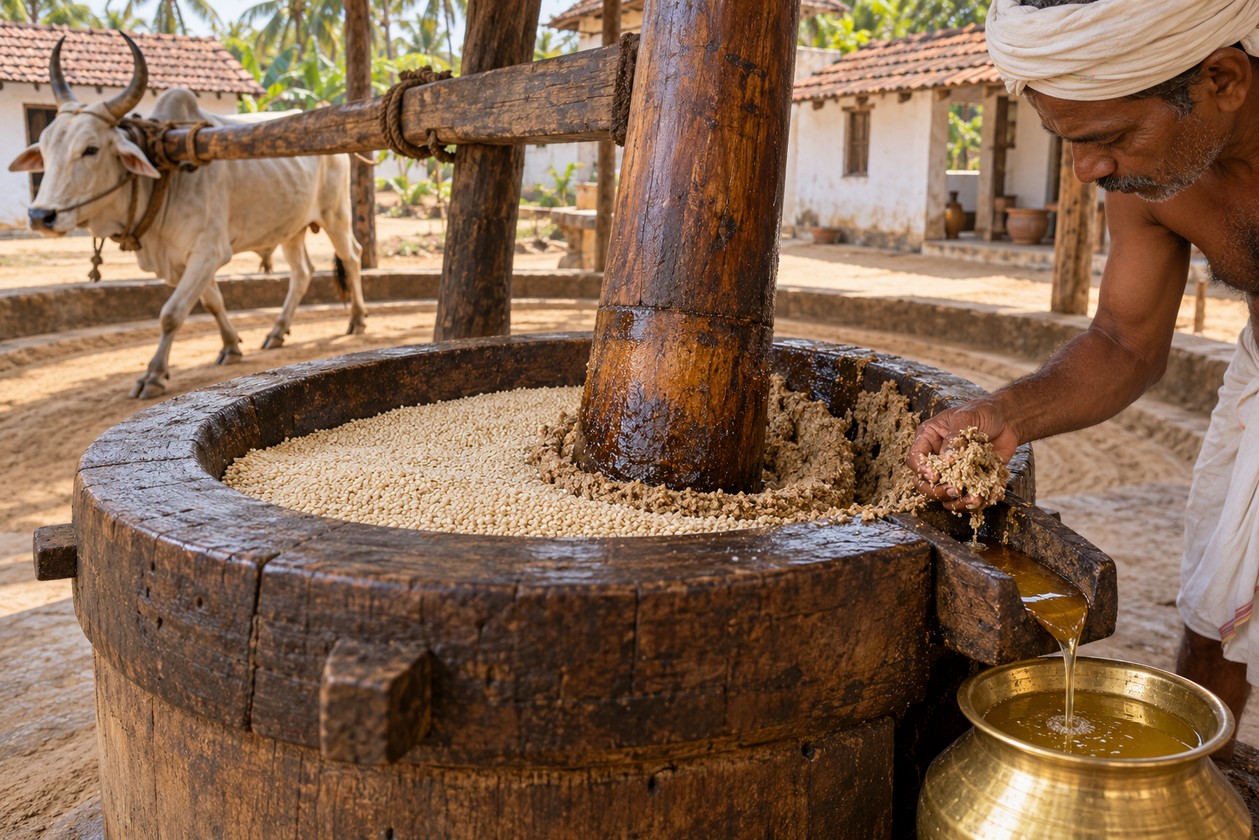
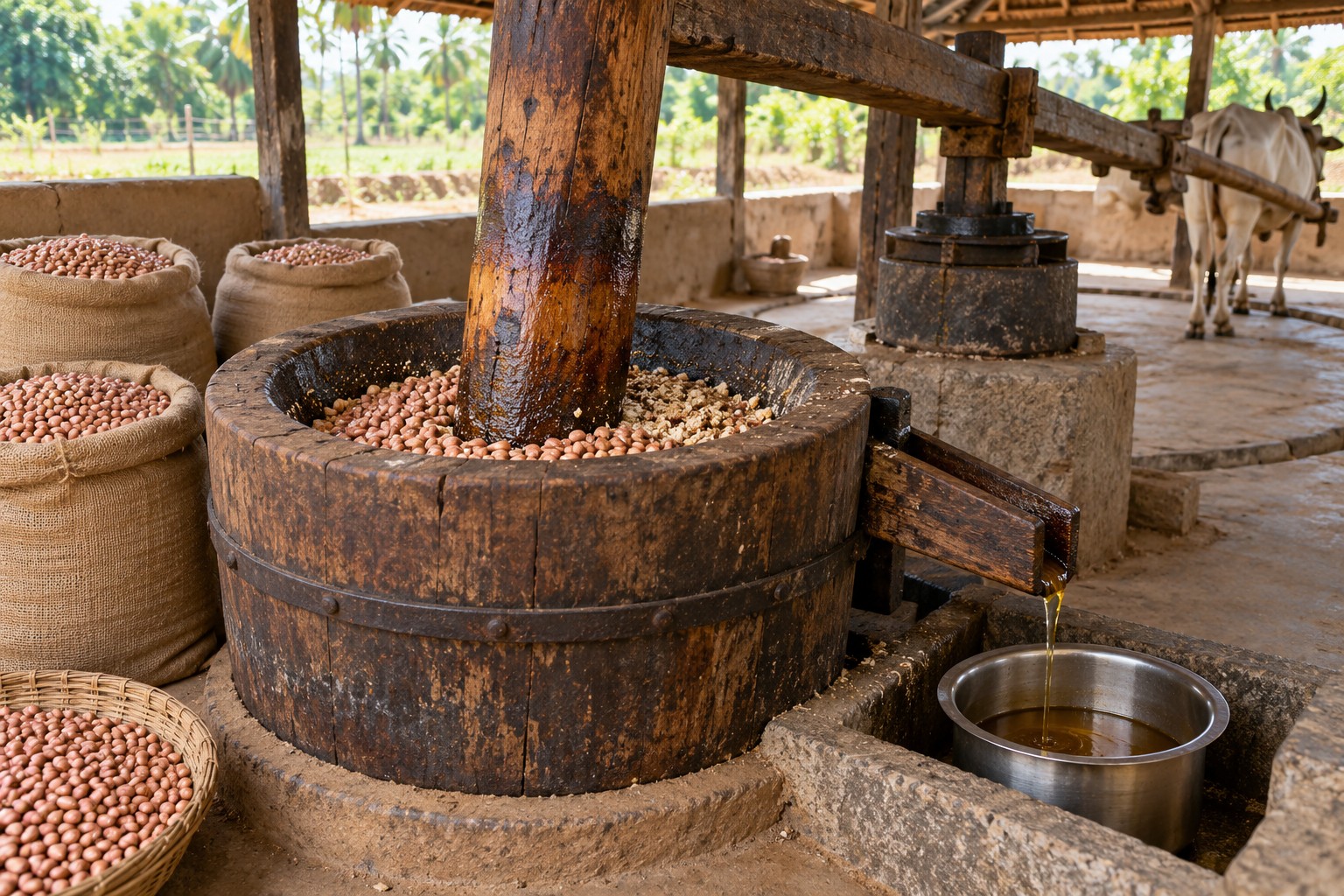
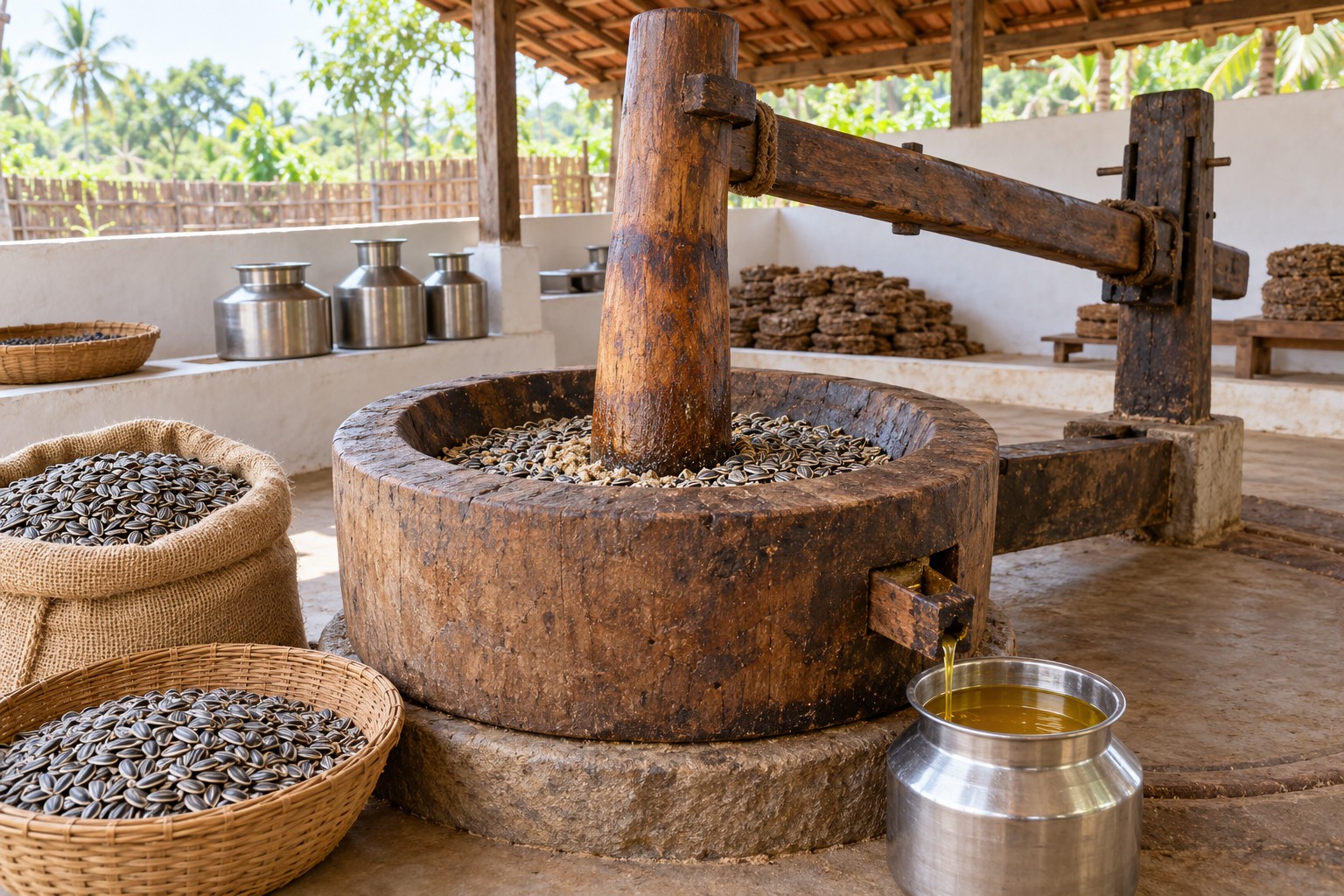
A ghani (also called a ganuga) works like a large mortar and pestle. A turning pestle crushes prepared seeds or kernels and releases oil. The oil can then be settled or filtered to remove particles. Seed selection, cleaning, drying, conditioning, equipment, temperature, filtration and storage all affect the finished batch.
Pressed and refined describe different steps. Pressing is a way to extract oil. Refining is further treatment after extraction—often including steps that adjust odour, colour, acidity and keeping quality. An oil can be pressed and then refined. Settling or filtering removes particles; it is not the same as full refining.
A traditional press alone does not prove that the oil stayed below a particular temperature, is healthier than refined oil, or has a specific nutrient level. Ask the producer about the actual process and look for batch records and test results where relevant. Colour and aroma can vary with seed, preparation and filtration.
01 · SESAME
Black sesame oil
A sesame oil with a nutty flavour; its finished aroma and colour depend on the seed and how it is prepared.
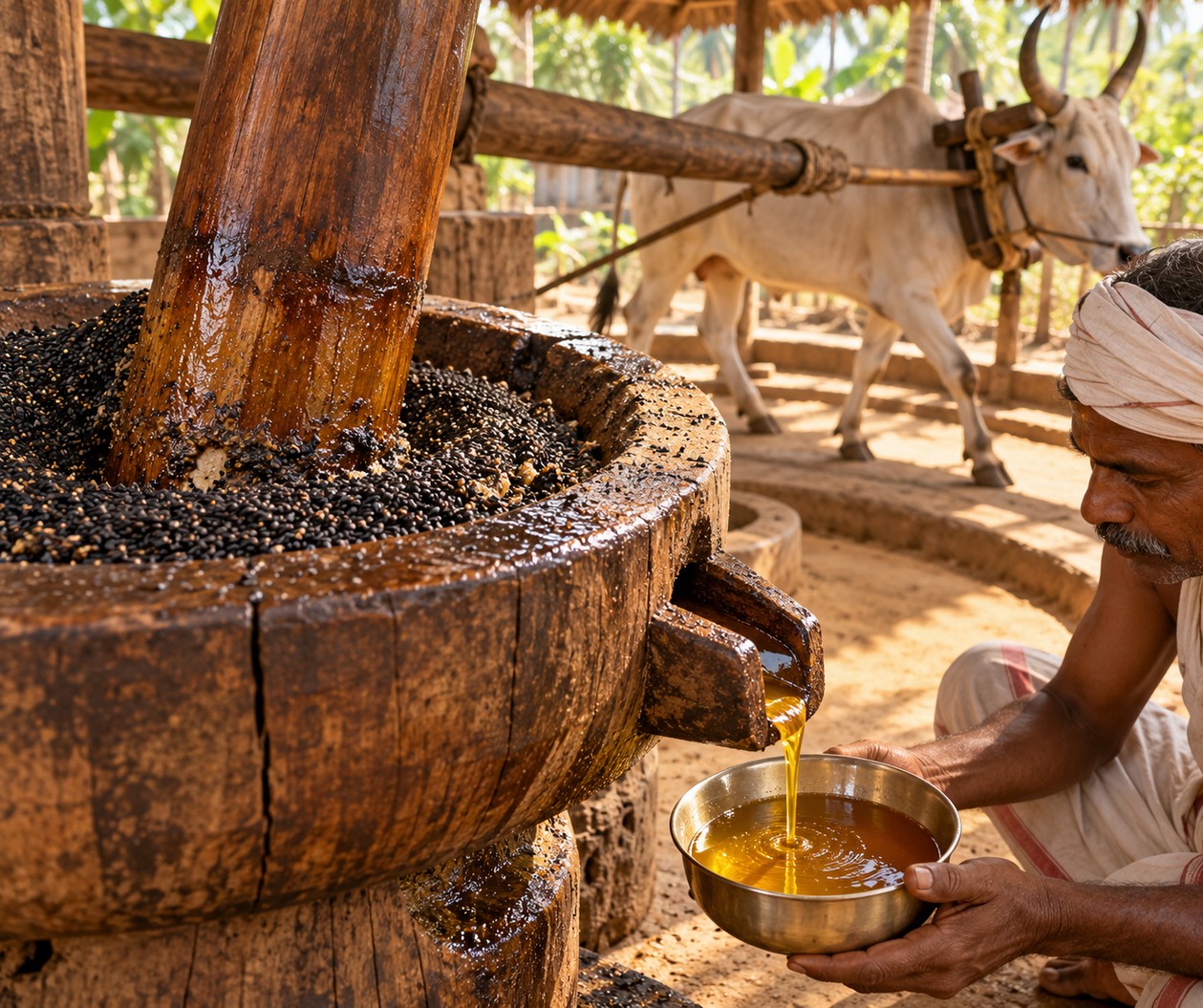
Illustrative ghani process. Equipment and practices vary; this image does not show Maahiri Foods production.
From seed to oil
Clean, sound seeds are prepared and crushed in the ghani. Some traditional sesame methods add measured water during crushing; mills differ. Roasting or warming can deepen aroma and colour. Oil is collected, settled and sometimes filtered.
In the kitchen
Use where a nutty sesame aroma suits tempering, curries, sautéed dishes, marinades or dressings. A more roasted style may taste stronger; follow the product’s own cooking directions.
Ask the mill: Are the seeds roasted or warmed? Is water used? How is temperature monitored, and how are the oil settled, filtered and stored?
Know: Black seed colour does not establish a special health benefit. Sesame is an allergen; people with sesame allergy should follow their clinician’s advice.
02 · COCONUT
Coconut oil
The starting material and method matter: ghani oils are often pressed from dried kernel (copra), while other oils use fresh coconut.
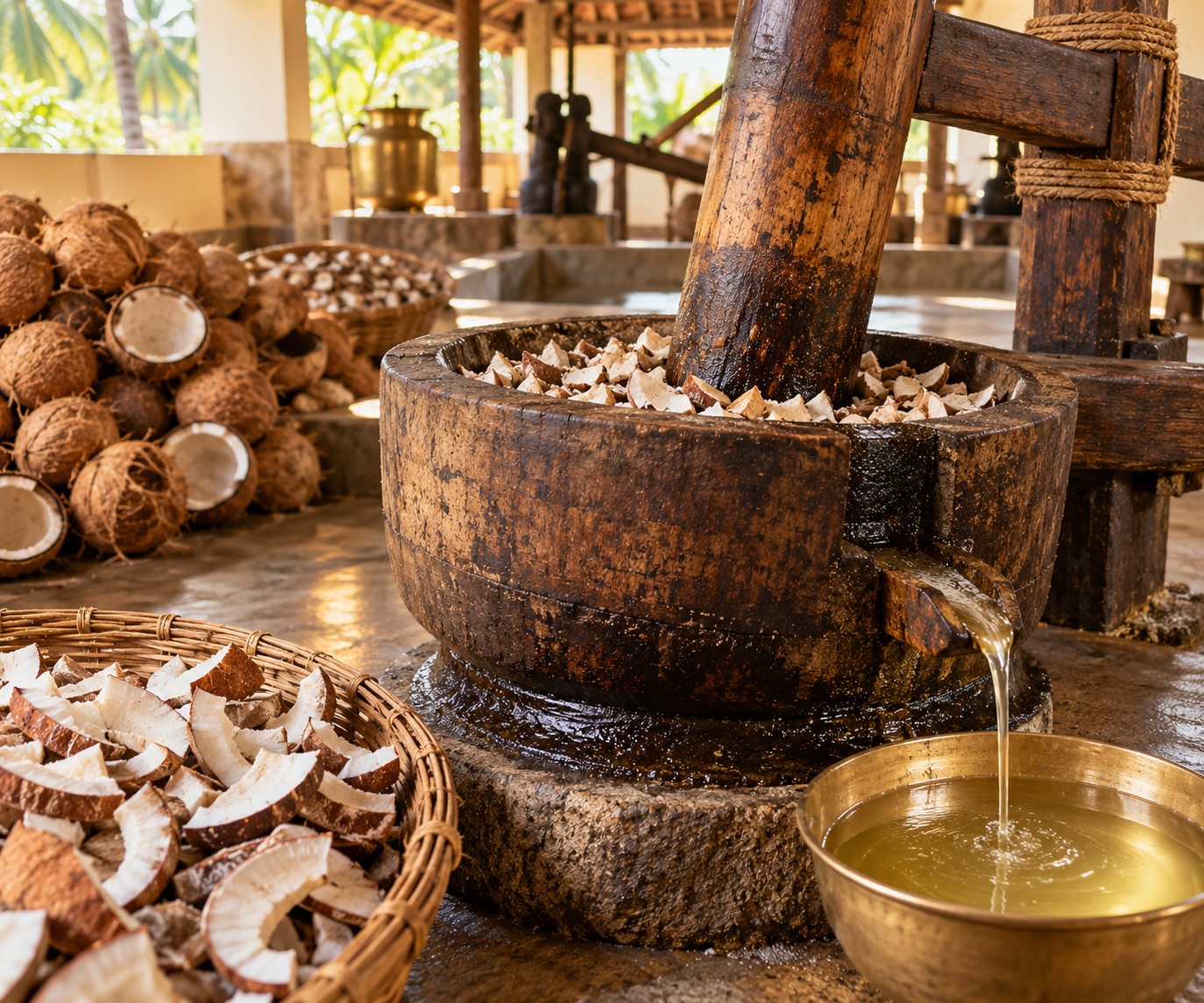
Illustrative ghani process. Equipment and practices vary; this image does not show Maahiri Foods production.
From kernel to oil
Mature coconut kernel is separated, dried into copra, prepared and pressed in a ghani or expeller. Some mills warm or cook the copra. Oil is collected and clarified. A wet method using fresh coconut milk or cream is a different process.
In the kitchen
Its flavour and texture can suit curries, sautéing and baking. Less refined styles may have a more noticeable coconut aroma; refined oil is generally milder. It can become solid in cooler conditions.
Ask the mill: Is the oil made from fresh kernel or dried copra? Which press or wet method is used? How are kernels dried, and is the oil heated, settled, filtered or refined?
Know: Coconut oil is high in saturated fat. Ghani pressing does not change that basic consideration; use a moderate amount as part of a varied diet.
03 · MUSTARD
Mustard oil
Seed variety and preparation influence its pungency, colour and composition.
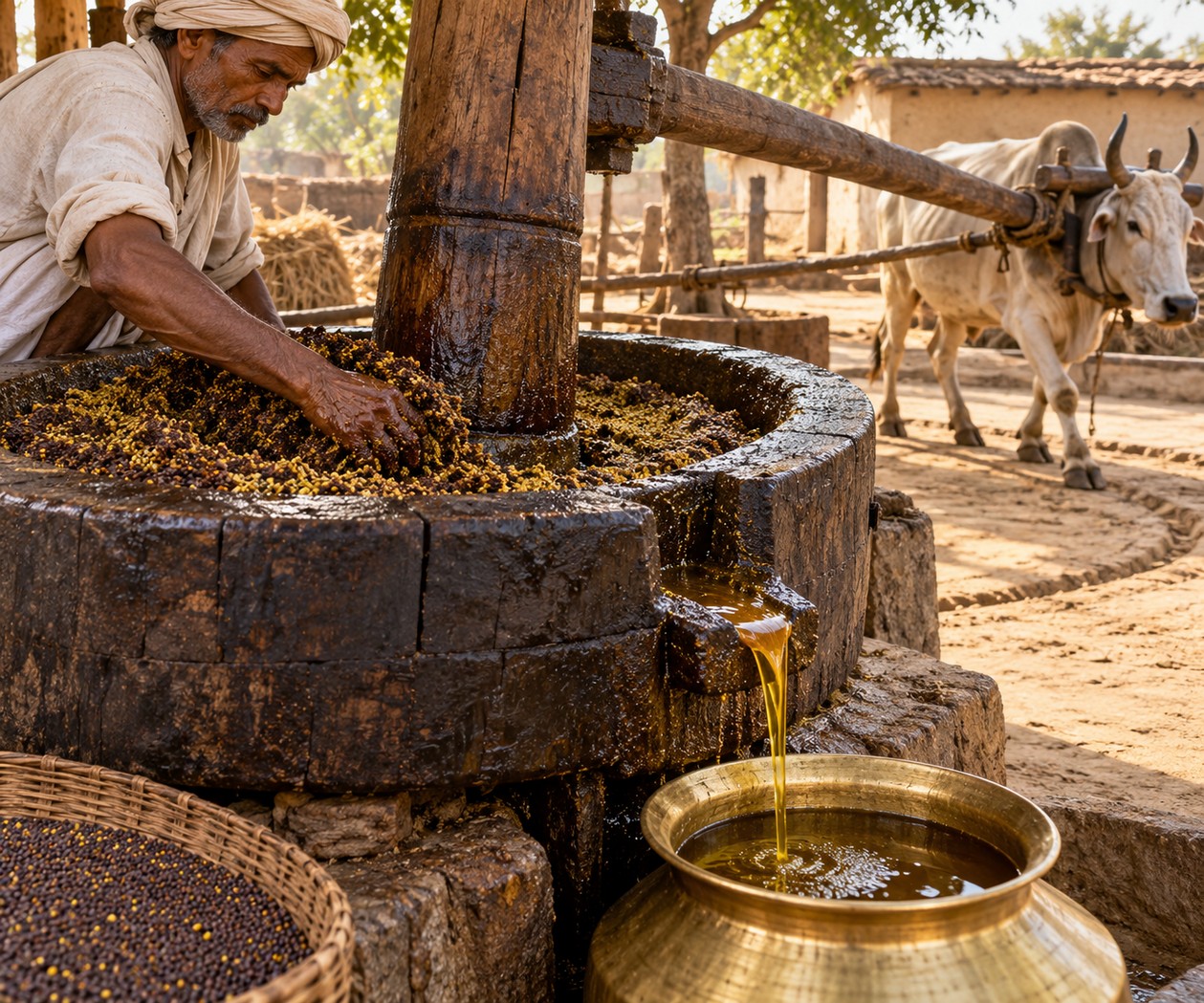
Illustrative ghani process. Equipment and practices vary; this image does not show Maahiri Foods production.
From seed to oil
Cleaned mustard or rapeseed varieties are crushed in the press. Some traditional methods condition seeds and may use water during crushing. The oil is collected, settled and sometimes filtered. Actual methods vary between mills.
In the kitchen
Its distinctive pungent aroma is used in tempering, curries, fish dishes and pickles. Choose a food-grade product and follow its label and cooking guidance.
Ask the mill: Which seed variety is used? Is it warmed or conditioned? Can the supplier provide batch records and an erucic-acid test where applicable?
Know: The press method does not establish erucic-acid content or a health benefit. Mustard is an allergen for some people; check applicable food-grade and allergen information.
04 · SAFFLOWER
Safflower oil
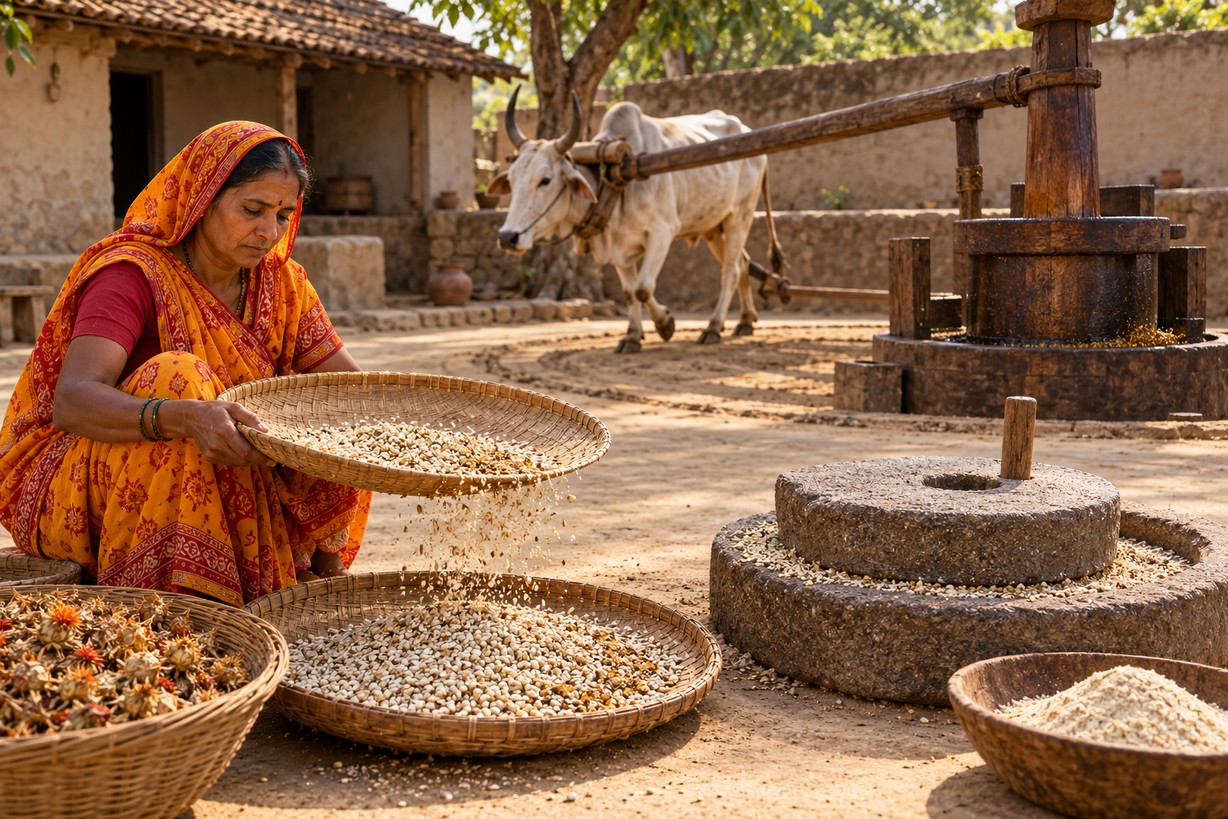
Safflower seed has a hard hull. Traditional preparation removes the hull so the kernels can be pressed.
Illustrative seed preparation for ghani pressing. Equipment and practices vary; this image does not show Maahiri Foods production.
From seed to oil
Seeds are cleaned, then may be ground, sieved and winnowed to separate hulls from kernels. Kernels are pressed; the oil is collected, settled and possibly filtered. Variety matters: conventional and high-oleic oils have different fatty-acid profiles.
In the kitchen
Its relatively light flavour can suit everyday cooking, dressings, sautéing, baking or finishing. Check whether the product is high-oleic or conventional and follow its cooking guidance.
Ask the mill: Which safflower variety is used? How are hulls removed? Is the oil high-oleic or conventional, and can the supplier provide a fatty-acid profile?
Know: Colour or the phrase “cold pressed” does not identify the oil’s fatty-acid profile or establish a medical benefit.
05 · SESAME
White sesame oil
White sesame is a seed variety, not a guarantee of a particular oil colour or flavour.
Illustrative ghani process. Equipment and practices vary; this image does not show Maahiri Foods production.
From seed to oil
Cleaned sesame seeds are crushed in a ghani. Some mills roast or warm the seeds; some traditional methods use water during crushing. Settling and filtration remove particles, while full refining is a separate step. Seed colour alone does not determine finished oil colour.
In the kitchen
Its nutty flavour can complement tempering, curries, sautéed dishes, marinades and dressings. Roasted styles may be more pronounced; refined sesame oil is generally milder.
Ask the mill: Are seeds roasted? Is water used during pressing? How is temperature controlled, and what settling or filtration is done?
Know: Sesame oil contains unsaturated fats, but it is food rather than a treatment for disease. Sesame allergy can be serious; processing does not automatically make it safe for someone with an allergy.
06 · GROUNDNUT
Groundnut oil
Also known as peanut oil. Sourcing, drying and storage are important parts of oil quality.
Illustrative ghani process. Equipment and practices vary; this image does not show Maahiri Foods production.
From kernel to oil
Groundnuts are shelled, cleaned and sorted before pressing. Kernels may be conditioned or warmed; press friction can also generate heat. Oil is collected, settled and sometimes filtered. Sound sourcing and mould-risk controls matter.
In the kitchen
A nutty aroma can suit sautéing, stir-frying, frying where the product specification supports it, dressings and marinades. Refined oil is generally milder and more uniform.
Ask the mill: How are groundnuts sourced, dried and sorted? What controls address mould and aflatoxin risk? Is temperature monitored, and what batch and quality records are available?
Know: Groundnut allergy needs special care. Less refined oils can retain proteins; people with an allergy should follow their allergist’s advice and not assume ghani-pressed oil is safe.
07 · SUNFLOWER
Sunflower oil
Seed variety influences the oil’s fatty-acid profile; pressing alone does not tell you which profile it has.
Illustrative ghani process. Equipment and practices vary; this image does not show Maahiri Foods production.
From seed to oil
Seeds are cleaned, and the mill may remove some or all of the hulls. A rotating pestle crushes the seeds; friction can warm them. Oil is collected, settled or filtered. Ask the producer whether it uses water or heat and records temperature.
In the kitchen
A mild flavour can suit dressings, marinades, sautéing, stir-frying, baking and roasting when appropriate for the product. Refined oil is usually more neutral; follow the label’s cooking guidance.
Ask the mill: Are hulls removed? Is heat or water used? How is temperature monitored, and can the supplier provide batch records and quality tests?
Know: Sunflower oil is mostly unsaturated fat, but no oil is a treatment for disease. Portion size and the overall diet still matter.